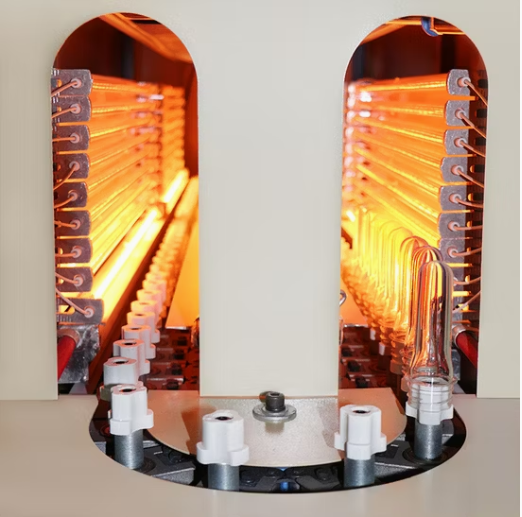
Fixing Those Annoying Heat Spots in Your KOSME KSB 4000
Ever pull a batch of PET bottles off the line only to find uneven walls or that weird, cloudy “pearlescence” look? It’s frustrating. Usually, it comes down to your KHS or KOSME blowing machine struggling with heat distribution. If your lamps aren’t creating a consistent thermal field, the problem is almost always the spectral output or a filament that isn’t centered properly in the tube. Basically, the heat isn’t hitting where it needs to.
Getting the Heat Right
We designed our replacement lamps for the KSB 4000 to be simple drop-in swaps. No hacking, no modifying. We match the original OEM voltage and wattage exactly so they just work. These use shortwave infrared (SWIR) tech. Instead of just heating the surface and hoping for the best, this concentrates the energy into a tight band. It punches through the PET preform wall quickly. The result? Your preform hits the glass transition temperature (Tg) much faster. **One quick heads-up:**Don’t try to fix cold spots by just cranking up the wattage. That puts way too much stress on your power supplies and makes your cooling blowers work overtime. It’s a recipe for a breakdown.
The Details That Actually Matter
We use high-purity quartz glass because nobody wants to deal with premature burnouts. We also make sure the filament is dead-center. If it’s off by even a bit, you get “hot stripes,” and that’s where those bottle defects start. Then there are the connectors. We use R7s or similar heavy-duty fits. You want a tight connection. A loose fit leads to arcing, and arcing will fry your socket in a heartbeat.
Real-World Tips
Once these are in, you’ll notice you aren’t constantly fiddling with the oven temperature settings. The heat profile stays stable across the whole zone. It’s a relief. But here’s the thing: these high-output tubes have a set lifespan. They don’t last forever. To keep things balanced, I recommend a staggered replacement schedule. Don’t swap the entire bank at once. If you replace them in stages, the thermal field stays even as the lamps age, and you won’t be blindsided by a sudden failure.