
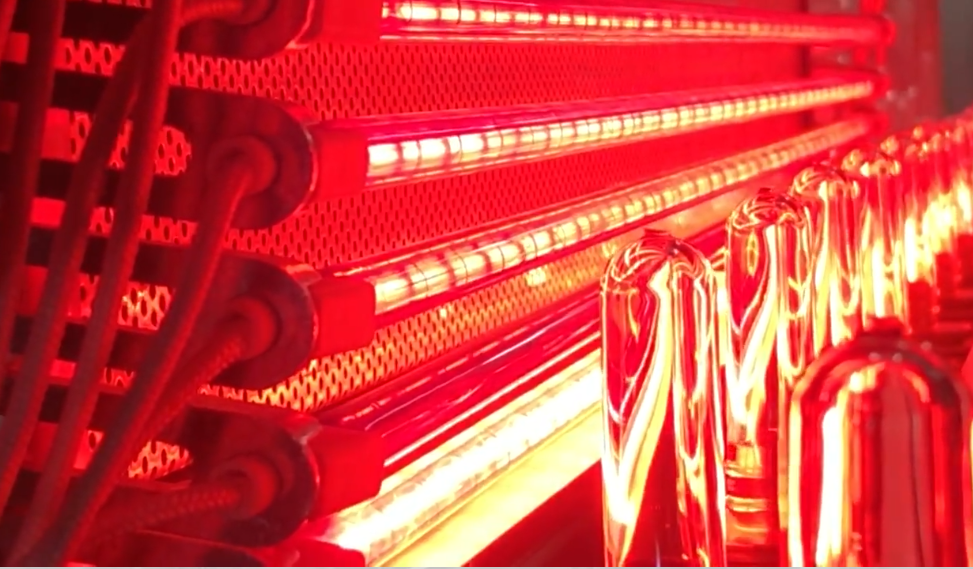
Out on the blow molding floor, uneven preform heating doesn’t just pinch cycle time—it bleeds scrap and forces you to rework. When the heating tunnel can’t hold temperature across the neck and body, stretch goes sideways, walls come out off-spec, and bottle weight starts wandering. We built an IR radiator for PETC preforms to lock that instability down, with heat that’s repeatable and aimed where it matters. What matters, technically The emitter is short-wave halogen, housed in a quartz tube—fast response, tight control right in the PETC absorption band. Wattage and voltage are matched to OEM specs, and the R7s connector interface keeps the lamp seated clean in the reflector without any field hacking. The filament geometry is tuned for uniform irradiance, so the body and neck heat on the same profile, not as two separate arguments. Why it works where you run it This radiator drops straight into Matrix, Krones Contiform, and Husky HyPET blow molders—no re-engineering, no guesswork. You keep the same heating tunnel layout and the same control logic, and you get tighter temperature repeatability. That means cycle recovery is quicker after changeovers, thickness spikes show up less, and you spend less time chasing drift. Energy use falls because the lamp hits setpoint fast and holds it with smaller swings, and lamp life stretches out thanks to lower thermal stress on the quartz and filament. A few practical notes Installation is straightforward, but keep reflector alignment and cooling airflow exactly as the machine was designed. If the reflector is dirty or airflow gets choked, output drifts and the lamp runs hotter. During routine PM, check reflector cleanliness and the air temperature at the lamp mount, and always use the exact OEM wattage and voltage rating for the replacement.