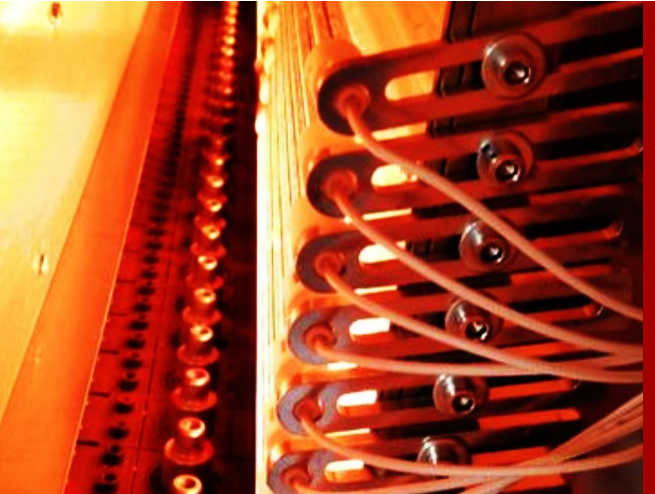
When the heating array on your PETC blow molder starts to drift, the line loses its rhythm. Preforms come out uneven. You end up chasing temperature bands, then scrapping parts. OEM halogen/infrared bulbs give you the right thermal match, but the price tag pushes a lot of us into a risky move: running aging emitters longer until quality slips. We built a direct-fit replacement that gives you the OEM heating profile without the OEM invoice. What matters, technically Our PETC blow molder heating array bulbs are engineered as 1:1 replacements for the halogen/infrared emitters in Sidel, Krones, SIPA, Husky, SACMI, and Nissei ASB machines. The specs are matched to the heating tunnel: standard voltages (typically 110–240 V), tight dimensional tolerances, and the correct R7s or equivalent connector geometry so the lamp seats squarely in the reflector. We use quartz tubes built for rapid heat-up and stable output across the PETC preform heating window, so the emitter holds power density without wild swings. In practice, that translates to repeatable preform skin temperature—and fewer tweaks between bottles and shifts. Why it holds up on the line On a blow molding line, consistent infrared output is what keeps cycle time stable and keeps pinholes, PET crystallization issues, and weight drift from creeping in. These bulbs hit the same peak wavelength and thermal response as the originals, so your heating curve doesn’t need re-engineering. You get faster warm-up to setpoint, lower energy draw per bottle once you’re in steady state, and longer emitter life—typically thousands of hours before output drops below spec. Fewer changeouts, less downtime, and maintenance windows you can plan around. The cost is positioned to deliver OEM-level performance with an OEM-backed manufacturing approach, so you can replace at scale without fighting budget approvals. Here are the practical details Installation is straightforward, but lamp alignment and reflector cleanliness make the difference. Always handle the quartz tube by the base, not the glass, and double-check your machine’s voltage and fixture type before ordering. If your heating tunnel runs very high duty cycles or has undersized airflow, run times will still be shorter—heat is heat. Match the spec, keep the reflectors clean, and the bulb will do the rest.