
A blow molder can be humming along at full speed and still eat away at your margins if the preform heating isn’t dialed in. You know the signs—off-spec bottles with thin walls, stress lines, or necks that feel weak, plus a scrap pile that shouldn’t be that big. Most of the time, the culprit is inconsistent preform temperature, and the place to fix it is right there in the heating tunnel.
What matters, technically
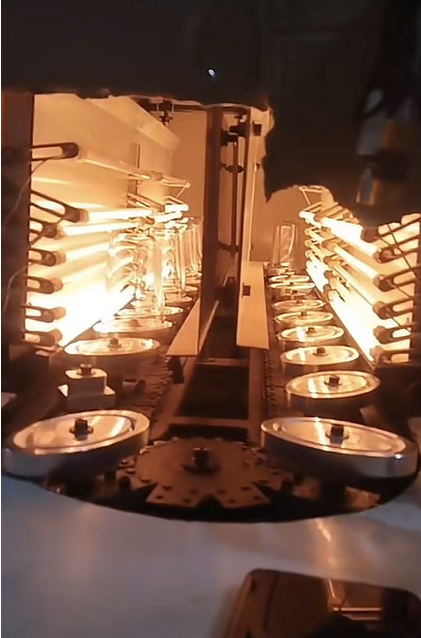
With PET preforms, infrared heating comes down to matching emitter output to how the material absorbs energy. We lean on short-wave quartz halogen emitters with a peak around 0.9–1.2 μm, chosen to surface-heat the preform quickly and evenly without cooking the core. Power density is set to the line speed and preform wall thickness—typically 30–50 W/cm² across the tunnel zones. Geometry matters just as much. You want R7s connectors, 33 mm or 38 mm tube diameters, and standard mounting lengths so the lamps drop straight into the heating modules on Sidel, Krones, SIPA, Husky, SACMI, and Nissei ASB machines. Set the filament geometry so the radiant field covers the shoulder and body uniformly. That’s how you avoid hot spots and cold bands.
Why this approach sticks
When the emitter spectrum and layout are matched to the machine, you get tighter control over preform temperature, which directly improves stretch ratio and material distribution. The payoff is fewer rejects, more consistent bottle weight, and faster stabilization after changeovers. Energy use comes down because infrared heats the preform directly, not the air around it, and quicker warm-up cuts standby draw. In practice, you see steadier setpoint tracking across the tunnel, which translates to more predictable cycle rates and less downtime chasing temperature drift.
The details that make it work
Installation is straightforward on most blow molders, but don’t overlook the reflectors and airflow patterns in the heating zone. They make or break uniformity. When you re-lamp, match the OEM’s wattage and length exactly. Slipping in a higher-wattage emitter in a fixed zone will throw off the temperature profile and stress the preform. Keep the lamp and reflector clean, and confirm the power supply and thermal control loops are calibrated. If your line runs multiple preform sizes, map the zone settings and lamp spacing to cover the full range without hot or cold edges.